
CO2 tolerance refers to the body’s ability to manage temporary imbalances of carbon dioxide (CO2) and oxygen in the blood stream, where CO2 is higher than normal – such as you would experience when exercising whilst controlling the breath.
An extreme example of why you would want to build a tolerance to raised CO2 levels is in the sport of freediving – you can simply survive longer and continue to function normally with lower levels of oxygen in the blood. However, we do it in yoga, not because we are holding the breath for any length of time, but because we are aiming to control the breath whilst we move. The controlled movements and controlled breathing patterns in yoga means we are likely to experience raised levels of CO2, and with practise, we can continue to move stronger, and hold poses for longer without adverse effects.
It also known that improved CO2 tolerance lowers the breathing rate and therefore heart rate, which benefits heart health and has positive effects on stress, anxiety and sleep difficulties.
How we practise building CO2 tolerance in yoga
Each yoga practise begins with settling the body and calming the mind through breathing exercises. Commonly we use box breathing which goes some way to raising CO2 levels and allowing the parasympathetic nervous system to take us to a state of relaxation and readiness for considered movement.
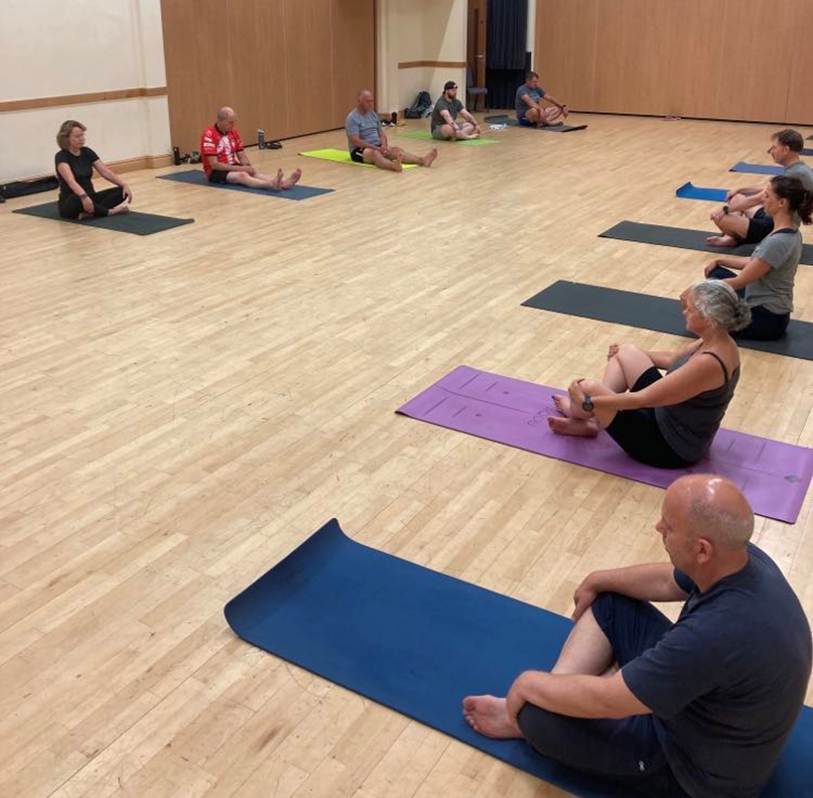
Recently we have been building on box breathing to further build CO2 tolerance by ‘sipping’ the breath for one minute rounds at a time, taking a few normal breaths between each round. Here’s how we do it:
- One deep breath to fill the lungs and let it go in an open mouthed sigh
- Inhale 1/3 of your normal breath, exhale to empty the lungs
- Inhale 1/3, hold for the count of 4, exhale
- Inhale 1/3, hold, exhale, hold
- One more deep breath to fill the lungs and let it go in an open mouthed sigh and allow your breathing to return to normal.
Most people begin to feel different by the end of the first round, and sometimes a little panicky when we introduce the holds. This is completely normal, and I encourage you to try to maintain control for as long as you can, but of course release control if you need to before trying again. It does take practise, but you will find you benefit from it during the yoga class and days that follow.
Join us at Ad Astra Yoga and Pilates
If you feel ready to improve your performance and resilience, alongside flexibility, mobility and strength, consider yoga and Pilates. It’s not just for girls, and it’s certainly not a lot of lying down!
Let’s talk about what you’d like to achieve and try your first class free. Contact me for an informal chat toady.