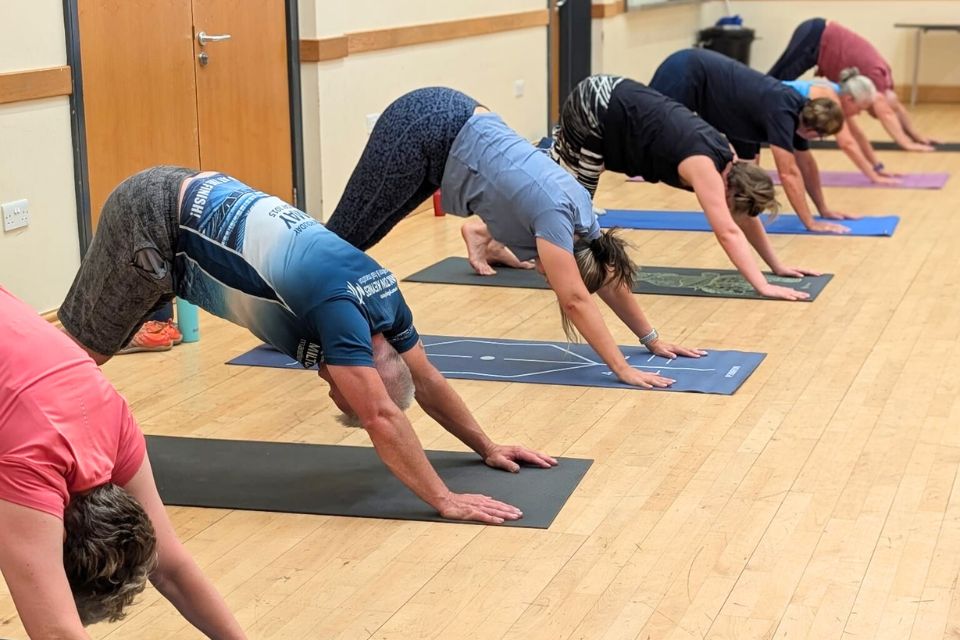
You probably already know there are lots of different styles of yoga you can practise, from the more difficult versions like Ashtanga, Hot Yoga and Power Flow that will physically test you, to Hatha and Restorative Yoga that require very little physical exertion.
But where does Vinyasa Yoga sit among those?
How difficult is Vinyasa Yoga?
Vinyasa, especially the way I teach it, is considered to be a good ‘all-round’ style of practise. While you can definitely push your limits, the general focus is to challenge yourself without pushing too hard. This ethos makes Vinyasa Yoga highly adaptable, not only from person to person, but from day to day as well.
The reason I chose to teach Vinyasa is because it’s simply my favourite style to practise myself and I see how it can be differentiated for all types of person – from those who are recovering from injury or have limited mobility, to those who think nothing of banging out a few Chaturangas every day!
The moves – what actually is a Vinyasa?
So, let’s start with the formal definition of the word: Derived from two Sanskrit words, vi meaning ‘in a special way’ and nyasa meaning ‘to place’, Vinyasa literally means to place in a special way – and that is how we move between poses – with mindfulness of how we place ourselves on the mat, and move from one pose to another.
We call it ‘flow’ yoga because we move between poses pausing only in some of the poses to benefit from the stretch, but it’s also about tapping into the flow of energy from the universe and aligning it with the energy within our bodies.
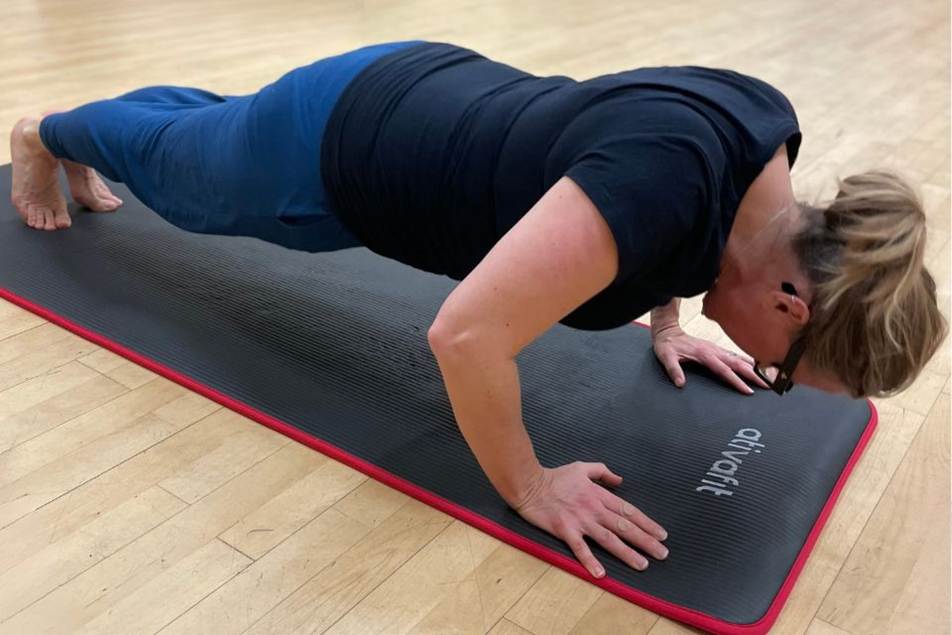
The actual part of our practise that uses the ‘Vinyasa’ is a Sun Salutation. The flow constitutes 7 poses from number 4 to 7…
- Up Salute
- Forward Fold
- Half Fold
- Stepping back into Plank
- Lowering to the ground via Chaturanga or Eight Limb Pose
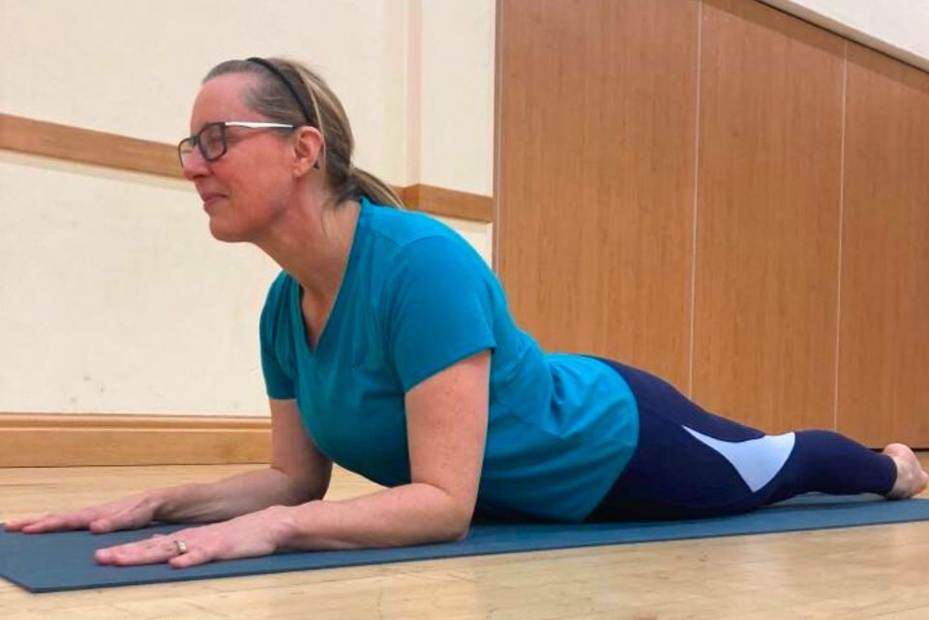
- Up Dog or Cobra
- Down Dog
- Stepping forward into Forward Fold.
- Half Fold
- Uncurling back into Up Salute.
This sequence of movements is also called Sun Salutation A, but there is another variation called Sun Salutation B that also uses the Vinyasa (three times!)
Then come the fun bits
A whole class cannot live on Sun Salutations alone! And after we’ve warmed up, that’s when the fun begins…
At any point, before or after any of those seven poses, we can add on and extend the flow by introducing new poses, before coming back to the set Salutation routine. My members are asked every term what they’d like to work on, so I can plan the addition of poses that isolate certain body areas.
My members, by the way, range in age from their 20s to their 70s and we have a roughly 50/50 mix of men and women in the same class, so there are a lot of different bodies all moving in their own way, but all in time – it’s truly a beautiful thing to witness!
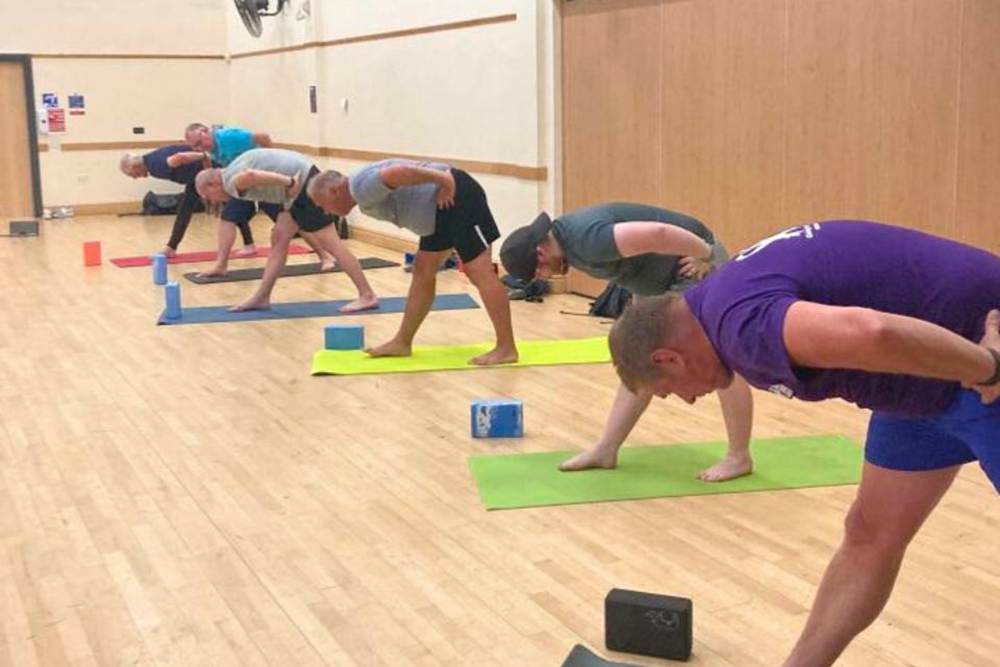
After an hour of Vinyasa Yoga with me, everyone leaves feeling like they’ve put the effort in and had a bit of fun with it too.
The Ad Astra vibe
While we do think about universal energy and how our minds and bodies are feeling before practise begins, I like to keep a generally light-hearted energy amongst the group. I find exercise of any kind is more enjoyable when you can relax and have a bit of a laugh.
If you’re looking for a Zen-Walking, Om-chanting yogi who doesn’t crack a smile (let alone a joke), you might be in the wrong place. But if you’re ready to learn a little bit about Vinyasa Yoga, work your body to some degree of challenge and are prepared to giggle along with the rest of the class when I fall out of a pose, then come on in, you’re most welcome!
Vinyasa is held in person every Monday night at 7pm and is also available to stream via Zoom. Have a look at the classes and the booking options, and send me a message if you have any questions. Namaste – Jayne.