

We’re all familiar with the recommended number of steps per day, just as we’re all familiar with ideally eating five (although some say seven) portions of fruits and vegetables, but who came up with that idea? And why is 10,000 steps a day the chosen number?
May is National Walking Month, so let’s look into that…
Mano-Kei – The Japanese pedometer
This might surprise you, but it wasn’t the World Health Organisation that came up with 10,000 steps a day, it was in fact a Japanese marketing campaign in the 60’s!
A pedometer was released called the Mano-Kei, which translates to ‘10,000 steps meter’. But the device itself was named after the Japanese saying, ‘hakken issho’, which means ‘10,000 steps a day for good health’.
Why 10,000? Because it’s simply a nice round number that is memorable and achievable for most people…
How long does it take to walk 10,000 steps?
It typically takes around 1.5 hours to walk 10,000 steps, on average at a moderate pace of 3mph. Now, that doesn’t mean you have to find that time every day, EVERY step counts towards the big 10,000, but of course the brisker your pace, and the more purposeful your stride, the more health benefits there are.
If you can pick up your pace to 4mph, you could be achieving 10,000 steps in about an hour. So, the question is, how are you walking, and where to?
Make the choice to go for a purposeful walk
While pottering about the house and around the shops does count as steps, it doesn’t technically count as exercise. This is because your heart rate won’t reach the zone where fat burning and cardio conditioning takes place.
Walking typically helps you achieve 50% – 70% of your maximum heart rate, which could be into zone 1 – the ‘warm up’ zone (for a 37 year old) but is most likely to be below that.
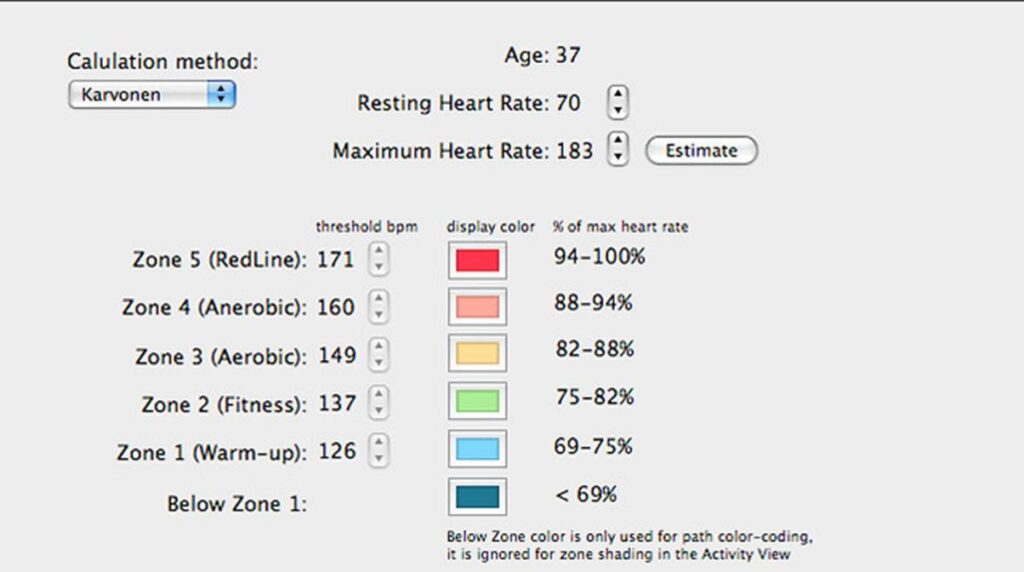
To improve fitness, which is obviously related to the 10,000 steps for good health goal, we’d need to make our walking more purposeful and raise that heart rate a little higher. Of course, as you get older, those zones shift a bit, so in fact for most of us in Ad Astra, we’d only need to pick up the pace a little bit!
A good rule of thumb for using walking as a method to improve your health and fitness is to walk so you get warm and a little bit out of breath. And if you can do it for an hour a day, brilliant!
To work out a rough estimate of your own maximum heart rate, subtract your age from 220… Or you could use the more accurate Norwegian University of Science and Technology’s formula: 211 – (0.64 x age). Bear in mind though, that there are more factors other than age that have an impact on heart rate…
Madie’s Mental Health Mates Walks
Ad Astra member, Madie Dalton organises semi-regular walks for our members, as pictured above. The routes vary depending on weather, accessibility and numbers, but they all aim to start and end by a café and last around 45 minutes to an hour.
The next MMHM walk is taking place on Saturday 24th May, the time and route is yet to be confirmed, but you can keep an eye on Madie’s MHM Facebook group for details. I’ll be there and I’d love to see lots of you too.