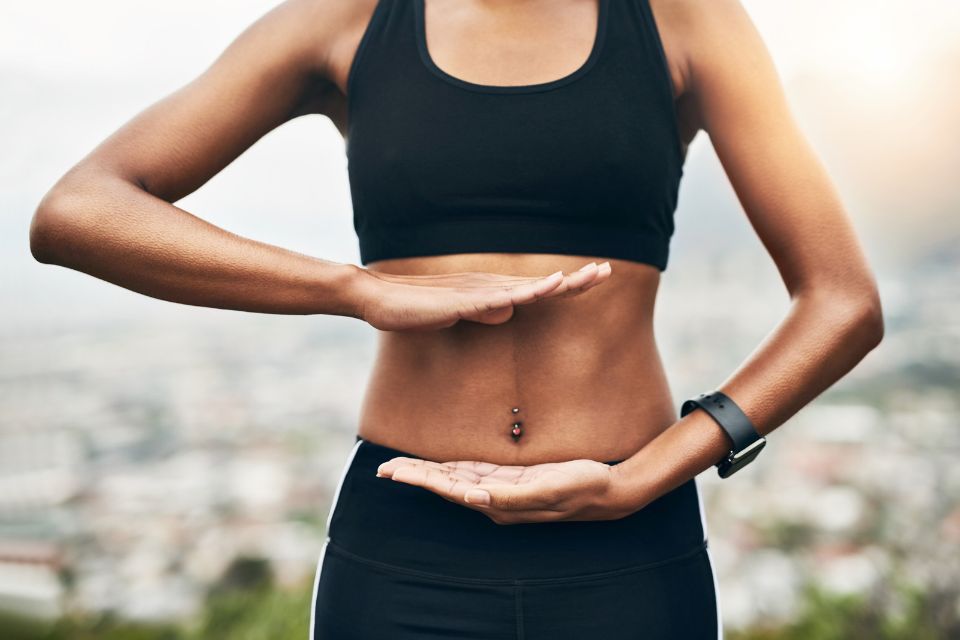
In the second series of blogs on the five functional movements of Pilates, we’re looking at ‘flexion’ – bending the spine forward. Spinal flexion builds Pilates abs by drawing in the deep abdominals. These are the ‘crowd-pleasers’ (or crowd-challengers) that people expect when they join a Pilates class!
Pilates gets to the deep muscles of the abs, starting with the transverse abdominis – the one that cinches your waist, and the internal and external obliques. This powerful series isolates, strengthens, and tests your core through continuous, controlled spinal flexion.
Breaking down of the Pilates abs moves
1. Single Leg Stretch
This classic move engages your deep core stabilisers to keep your torso strong while your limbs move independently.
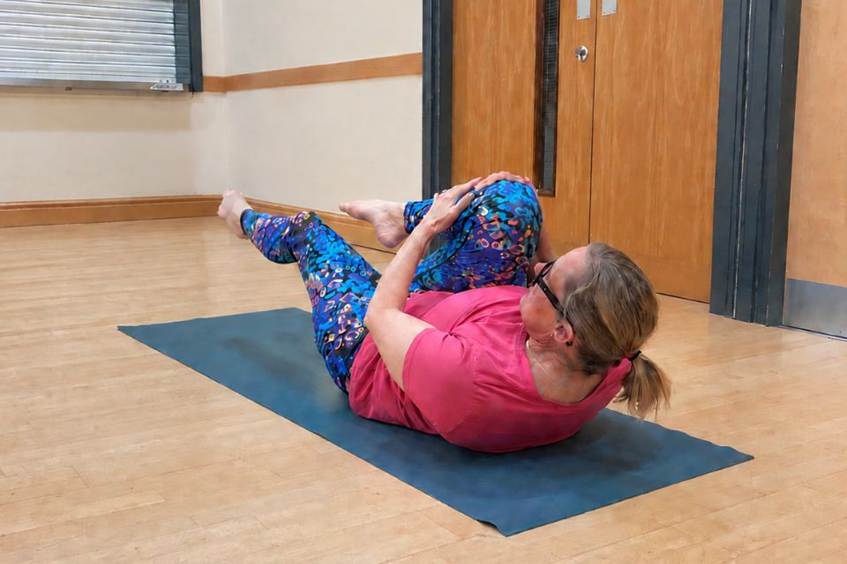
How to do it: Lie on your back and curl up into a ball, hugging both legs towards your chin. Place both hands on one ankle or shin. Extend the opposite leg away as low as you comfortably can without your back lifting off the mat. Exhale when drawing the knee closer, switch sides whilst inhaling.
2. Double Leg Stretch
Stepping it up a notch, the Double Leg Stretch challenges your core’s stability even further as both arms and legs reach away from your centre simultaneously.
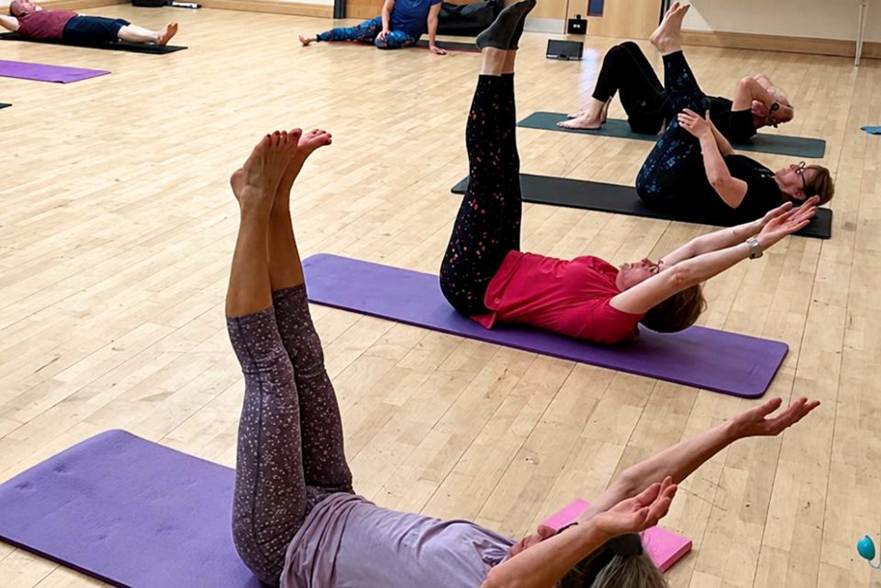
How to do it: Lie on your back and curl your head, neck, and shoulders off the mat into a mini-crunch. Extend both legs straight up toward the ceiling Inhale as you extend your arms back past your ears and reach both legs out to a 45-degree angle. Exhale as you sweep your arms wide around and pull your legs back towards your chest. Sink your abs deep toward your spine to maintain a neutral spine and keep your lower back pressed into the mat.
3. Single Straight Leg Stretch (Scissors)
Also known as Scissors, this exercise introduces a hamstring stretch while demanding rapid core engagement to control the movement of extended legs.

How to do it: Begin in the same position as the Double Straight Leg Stretch. Extend both legs straight up toward the ceiling. If you’re using your hands, place them both on the calf of one leg and quickly pulse it towards you twice, with two rapid exhales, allowing the other leg to scissor away toward the mat. Inhale to switch legs and repeat.
4. Double Straight Leg Lower/Lift
This move is seriously strong on your abs and requires maximum effort from your lowest abdominal muscles to control the heavy levers of your legs. You must be careful not to strain your back on this one…
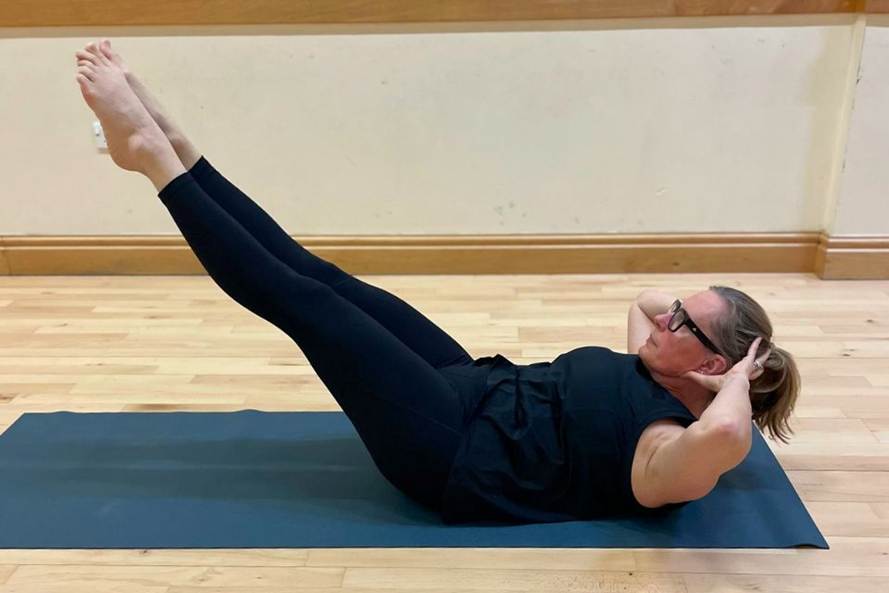
How to do it: Interlace your hands behind your head to support your neck while keeping your elbows wide and chest lifted like with a crunch. Extend both legs straight toward the ceiling with heels glued together. Inhale as you slowly lower both legs down toward the floor, but only as far as you can maintain a neutral, grounded spine. Exhale to raise both legs back up to the vertical using your deep core.
5. Criss Cross
Waking up your obliques! Criss Cross in any other class may be called ‘bicycle crunch’ and incorporates rotational flexion, sculpting the sides of your waist while keeping your lower body pinned.
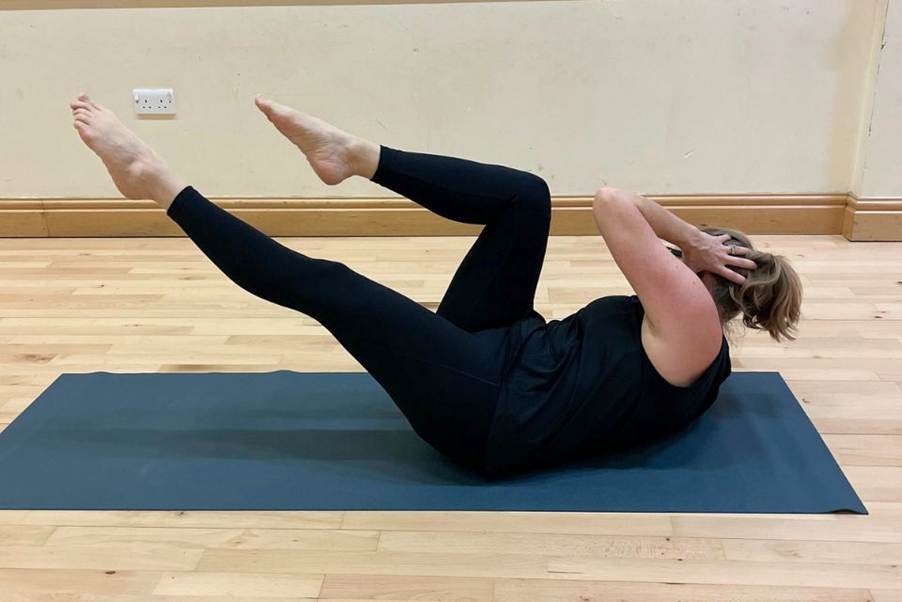
How to do it: With hands still cradling the head and knees held in table-top, lift into a central curl. Exhale as you rotate your chest to bring your right shoulder (not just your elbow) toward your left knee while extending the right leg away. Inhale to turn to the centre, then exhale to twist to the opposite side, keeping your pelvis anchored and stable.
6. Neck Pull
A deceptively powerful move, the Neck Pull requires full-range spinal articulation and abdominal control through both lengthening and shortening the abs.
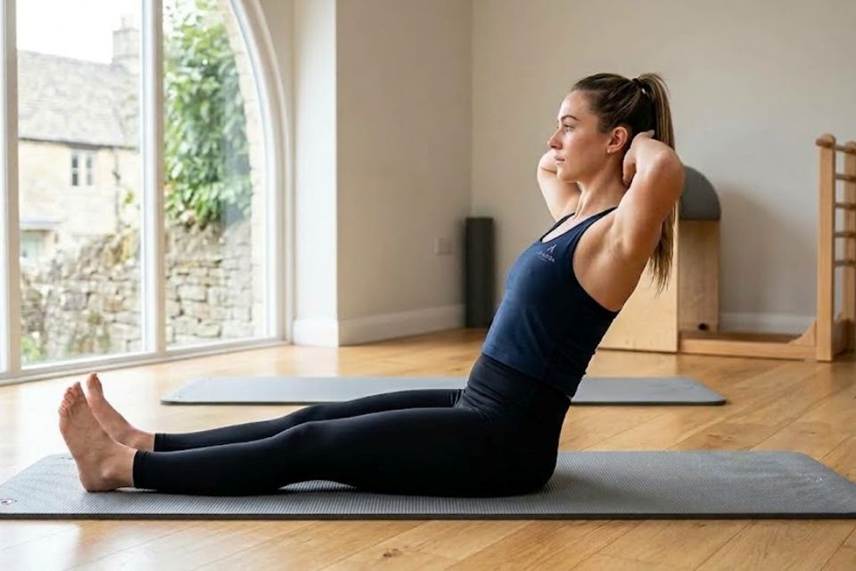
How to do it: Lie flat with your legs hip-distance apart and hands interlaced behind your head. Flex your feet so your toes point up. Inhale as you curl up through the spine, peeling off the mat one vertebra at a time until sitting tall. Hinge back with a flat spine as far as controlled, then curl through your lower back to articulate all the way down to the mat with total precision.
The Pilates philosophy
Jospeh Pilates designed a numerical order to his moves, but my classes aren’t put together that way. This series of Pilates blogs has them grouped for function, such as core stability, flexion and spinal articulation. My members choose what they want to work on each term, and I design the class content around that, adding in some non-traditional Pilates moves for fun!
The important part of Pilates though is that you execute the moves slowly and with support from your breath. We don’t want to use momentum to get those limbs moving – just your deep abdominals and that’s when you get the most out of it.
If you’d like to join us, you can do so for a free trial by messaging me and asking any questions. Or book online via the portal.
I look forward to meeting you soon, Jayne.